
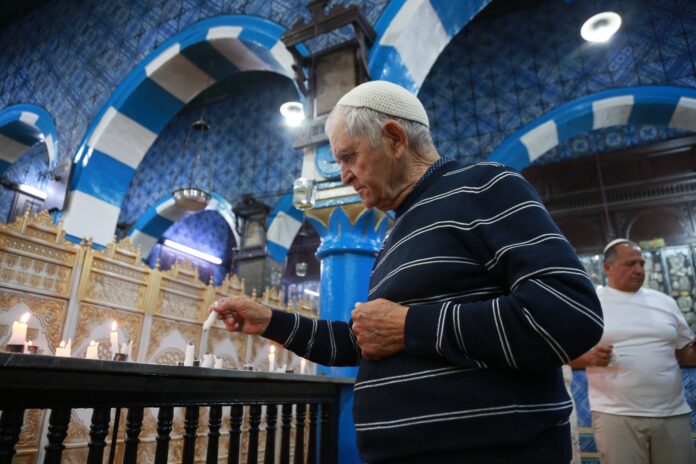
DJERBA, Tunisia – Imen Oueslati / (AP) — The annual Jewish pilgrimage to the 26-century-old El-Ghriba Synagogue in Tunisia drew a modest but notable return of international visitors this year, worshipping together under tight security after a deadly 2023 attack disrupted the festival.
Visitors came from France, China, Ivory Coast and Italy, including France’s ambassador to Tunisia, a symbolic gesture after two French citizens were among those killed in the 2023 attack. A national guardsman shot and killed five people at the El-Ghriba synagogue soon after the festival that year, spreading fear among the local Jewish population and international pilgrims.
Participants said about 500 people have attended this year’s pilgrimage, held on the Mediterranean island of Djerba from April 30 to May 6 to celebrate the Lag B’Omer Jewish holiday. Jews have lived in Tunisia since Roman times, and the pilgrimage remains central to the country’s small but long-standing Jewish community.
Here is a paragraph on the history of Tunisian Jews:
The Jewish Community of Tunisia: A History Spanning Three Millennia
The Jewish presence in Tunisia is one of the oldest and most continuous in the world, dating back over two thousand years to the era of the Phoenician and Roman empires, long before the Arab conquest of North Africa in the seventh century. According to historical records, Jewish communities settled along the Tunisian coastline following the destruction of the First Temple in Jerusalem in 586 BCE, finding refuge in the fertile lands of what was then known as the Roman province of Africa Proconsularis. Over the centuries, Tunisian Jews developed a rich and distinctive cultural identity, blending Hebrew religious traditions with Berber, Arab, and later Ottoman influences, producing a unique dialect, cuisine, and artistic heritage that set them apart from Jewish communities elsewhere in the Mediterranean world. At their demographic peak in the mid-twentieth century, Tunisian Jews numbered close to one hundred thousand, concentrated primarily in Tunis, Sfax, Sousse, and the island of Djerba — home to the ancient El-Ghriba Synagogue, one of the oldest houses of worship in Africa. The waves of emigration that followed Tunisian independence in 1956, the Arab-Israeli wars of 1948 and 1967, and the broader regional tensions of the post-colonial era dramatically reduced this population, driving most Tunisian Jews toward Israel, France, and other Western countries. Today, fewer than two thousand Jews remain in Tunisia, yet their cultural and historical imprint on the country endures, visible in architecture, gastronomy, language, and the living memory of communities on both shores of the Mediterranean.
Jewish pilgrimage 2026
Inside the synagogue, the atmosphere was calm and devotional, while also buzzing with conversations and social exchanges. Worshippers lit candles, read sacred texts and wrote wishes on eggs later placed in a sacred cave within the complex, a tradition believed to bring blessings.
Among them was Redj Cahen, a Tunisian-Italian pilgrim who returned after missing last year’s gathering. “We are back, and we are proud to be Tunisian Jews,” he said. “It is a feeling you cannot explain. Only those who come here understand.”
The gathering draws both local worshippers and members of the diaspora returning to their ancestral roots and has long been seen as a symbol of coexistence, attracting Muslim visitors alongside Jewish pilgrims.
A visible but contained security presence surrounded the synagogue, while heavier measures were deployed at access points to the island, where police checkpoints and barricades controlled entry. Vehicles were searched and identification documents carefully inspected. Within Djerba, security was especially concentrated in Hara Seghira and Hara Kebira, the island’s main Jewish quarters.
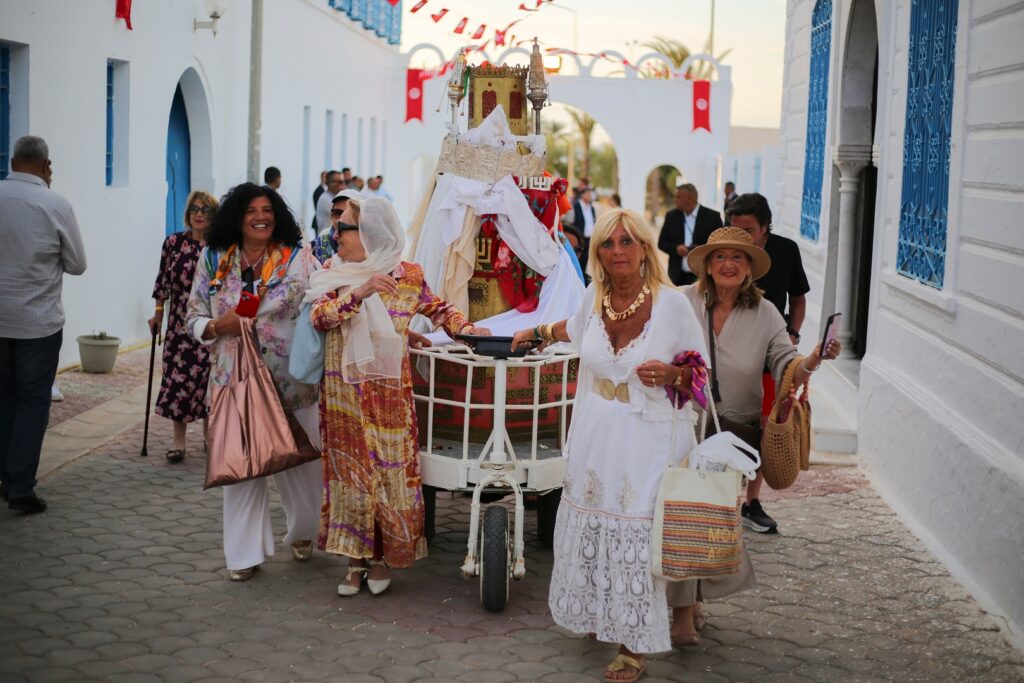
Despite security worries, the traditional “Minara” procession took place for the first time since the 2023 attack, signaling a cautious easing of restrictions.
The Minara, a pyramid-shaped tower of gold and silver, is placed at the center of the synagogue. Women drape it with colorful scarves in a gesture associated with good fortune, fertility and marriage. A symbolic auction of paintings and Jewish religious items follows as part of a traditional fundraiser for the synagogue’s maintenance, after which the scarf-laden Minara is placed on a cart and paraded outside to the sounds of the traditional darbuka drum, singing and throwing of candy. It is later brought back into the synagogue, concluding one of the event’s pillar traditions.
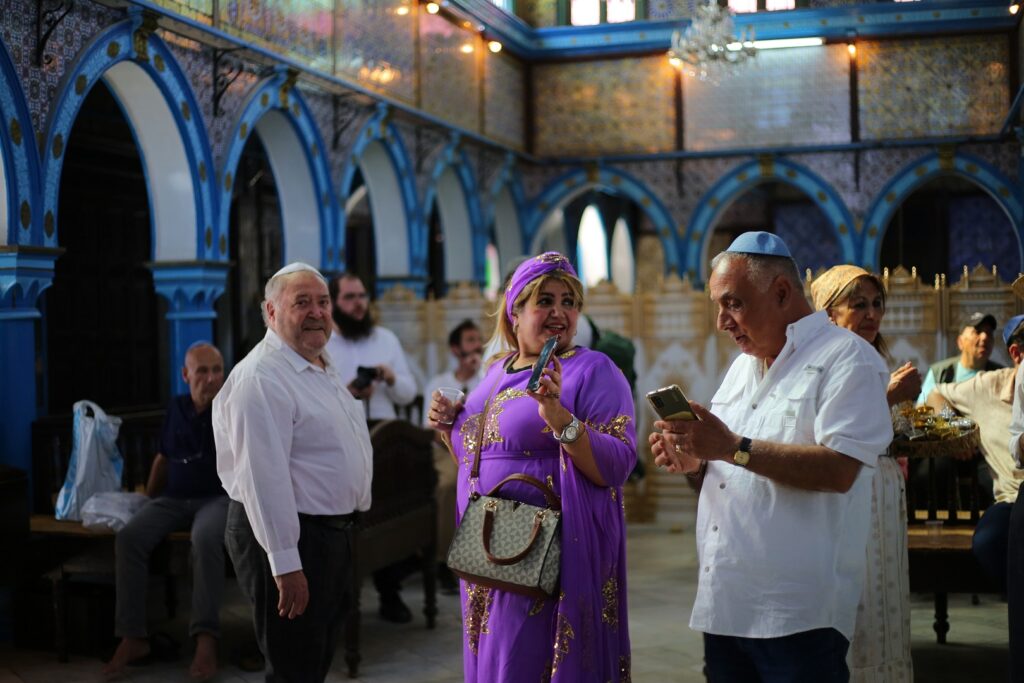
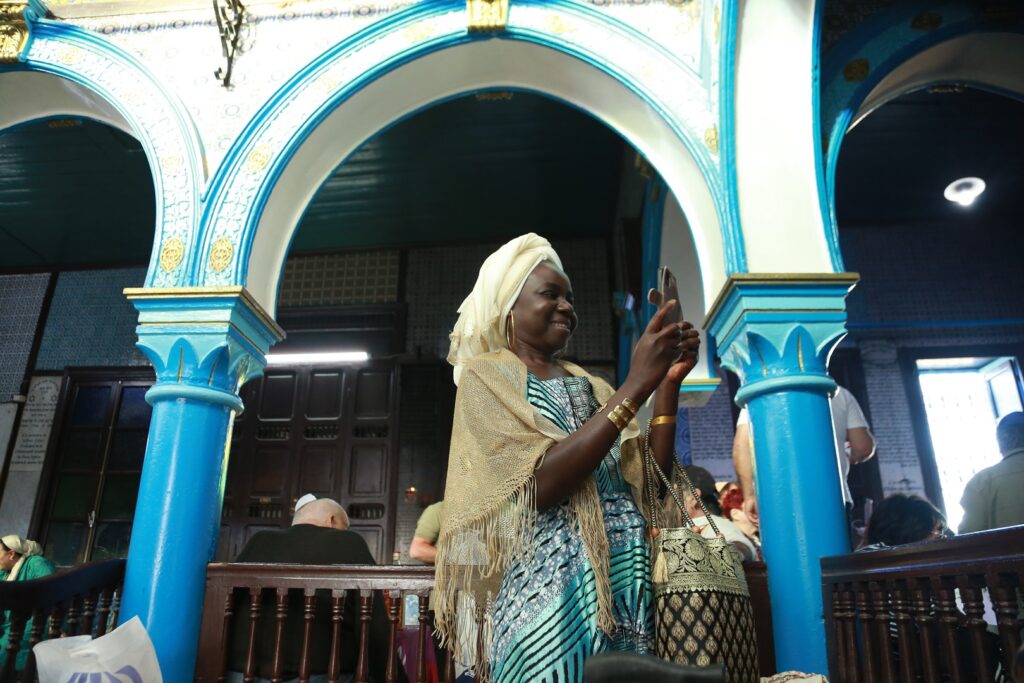

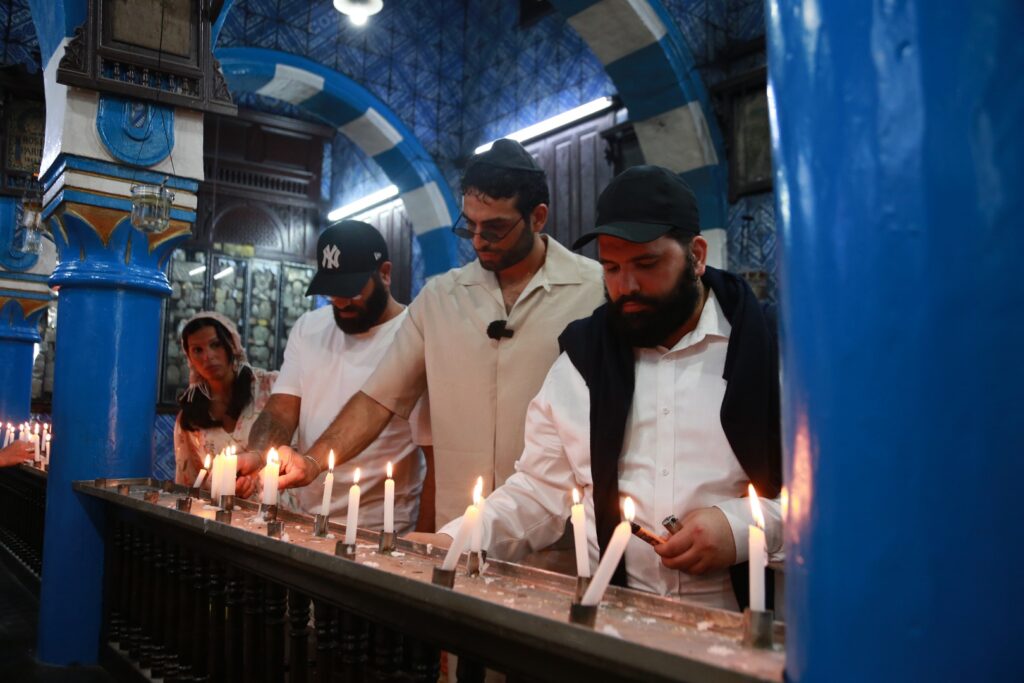
The pilgrimage, one of the oldest in Africa, has historically drawn thousands from around the world. Attendance dropped sharply after the 2023 shooting outside the synagogue that killed two pilgrims and three security officers. The synagogue was also targeted by a 2002 truck bombing by al-Qaida that killed about 20 people.
“This year’s Ghriba pilgrimage marks a gradual return,” said former Tourism Minister René Trabelsi. “We are returning little by little.”
Trabelsi said Tunisian authorities had pushed to maintain the pilgrimage despite the challenges. The event plays an important role in supporting the local economy.
Khedir Hnaia, who has worked at the synagogue for more than three decades, welcomed the return of longtime visitors. “We would like to reflect a good image to the world, to bring back the glory of Ghriba and make it even better than how it used to be,” he said.
“We need to stand up for our country, we love Tunisia very much and in the same way our country stood up for us we will always stand up for it,” said Haim Haddad, a member of the pilgrimage organizing committee from Zarzis.