

Two Tunisian journalists have recently fueled a deep controversy within the country’s civil society. The first, an employee of Tunisian National Radio, a public institution funded by taxpayers, openly labeled anti-racism activists as traitors to the nation and agents serving the West. The second, a columnist on a popular private television channel, went so far as to demand that sub-Saharan migrant women be forbidden from giving birth on Tunisian soil. These statements, widely shared on social networks at the beginning of 2026, pose with renewed urgency a question that Tunisia has not yet been able to resolve: How far can hate speech thrive with impunity in a country whose law expressly condemns it?
Statements that go beyond opinion: Live incitement to hatred
The case of Wissal Kassrawi, a journalist at Tunisian Radio, is particularly revealing given the stature of the institution that employs her. By publicly addressing human rights defenders to label them “traitors” and “enemies of the nation,” she did not simply express an opinion. She adopted the classic rhetoric of populist nationalism: turning the accusation of complicity with an external enemy back onto the victims of racism. According to this logic, defending the dignity of an African migrant would amount to betraying the Tunisian nation – a semantic shift that is far from trivial when it comes from a voice broadcast by a state-owned media outlet.
The case of Imen Jelassi, a columnist on the Attessia channel, touches on another dimension, potentially even more serious in its implications. By publicly demanding that sub-Saharan women be prevented from giving birth to their children in Tunisia, she crossed a line unambiguously defined by international human rights law: the forced reproductive control of a population on an ethnic or racial basis constitutes one of the most serious forms of discrimination, listed as such in international conventions that Tunisia has, after all, ratified. These statements, made on a national television set, immediately sparked indignant reactions from human rights associations, legal experts, and doctors.
What is striking in these two cases, beyond their content, is the casualness with which these remarks were made. Not in a hallway, not in a private circle, but in front of cameras and microphones, as if shame had switched sides – as if it were now those defending equality and human dignity who had to justify themselves.
A pioneering law that no one applies
Tunisia is not a country lacking legal protections against racism. In October 2018, its parliament adopted, by a very large majority, Organic Law No. 50-2018 on the elimination of all forms of racial discrimination. This text was hailed at the time as a historic first, not only in North Africa but across the entire Arab world. It provides for prison sentences ranging from one month to three years, accompanied by fines, for anyone who utters racist remarks, incites hatred, or disseminates or advocates racism. Sentences are doubled when the perpetrator holds de facto or legal authority over the victims – a provision particularly relevant for media personalities addressing thousands of viewers or listeners.
Yet, since its adoption, this law has resulted in only a tiny number of convictions. The National Commission to Combat Racial Discrimination, which the text provided for creating, never truly became operational. The gap between legislative ambition and the reality of its application is not a technical subtlety: it reflects a political choice. Because at the same time that purveyors of racist discourse remain freely active in the media, investigative journalists, political opponents, and ordinary citizens face prosecution for social media posts deemed critical of the government. This asymmetry in the use of justice is, in itself, a form of message.
The question that legal experts and civil society organizations insistently ask is therefore simple: Why does the Tunisian prosecutor’s office not initiate proceedings on its own initiative against remarks that objectively meet the criteria defined by the 2018 law? The answer to this question escapes the legal domain and enters that of political will.
Context: A Tunisian society under pressure, migrants on the front line
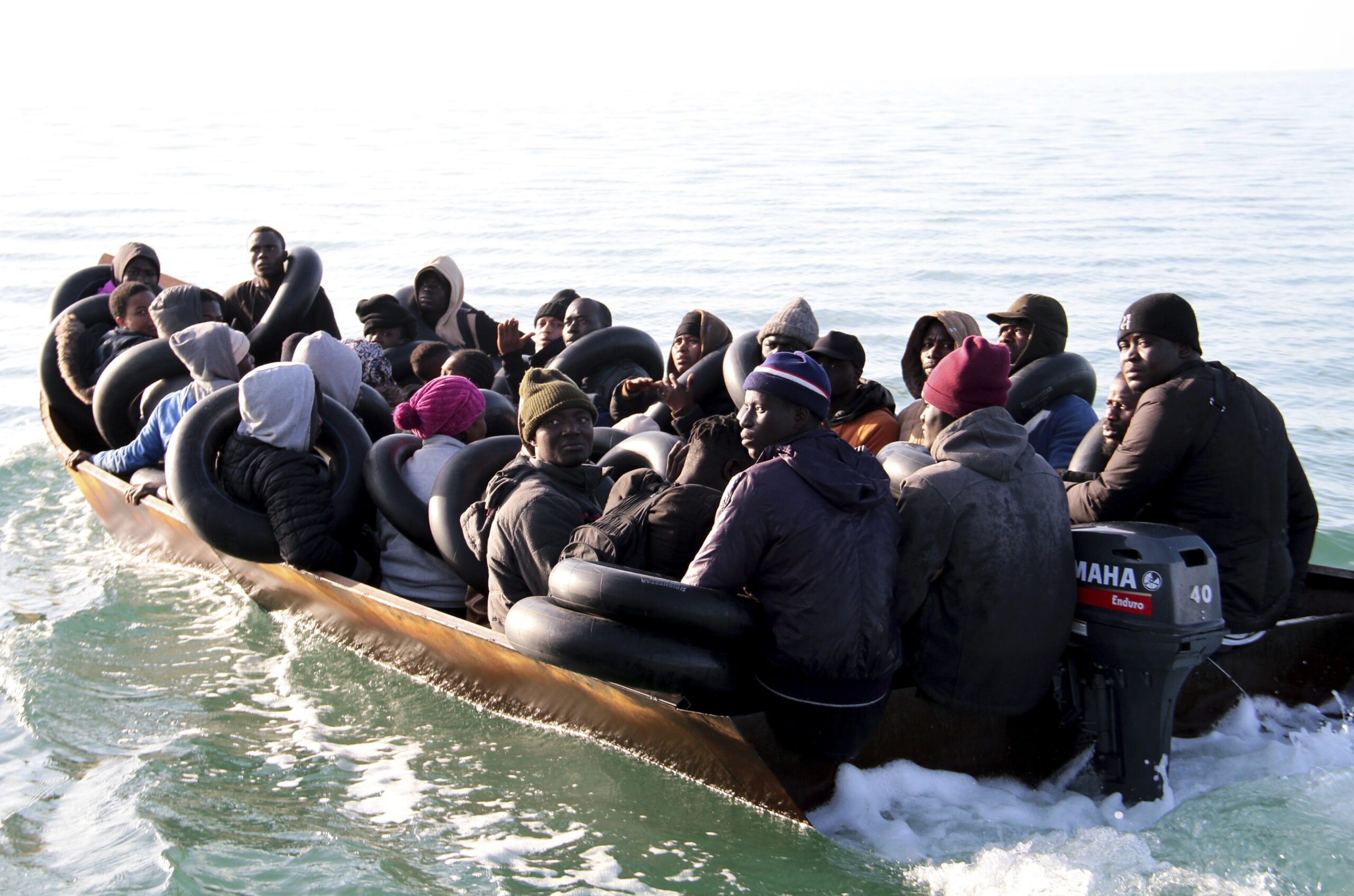
To understand how such remarks could be made so publicly, we must return to the turning point of February 2023. On that date, President Kaïs Saïed delivered a speech before the National Security Council in which he described the presence of sub-Saharan migrants as the result of a “criminal plan” aimed at changing the demographic composition and the Arab-Islamic identity of Tunisia. These statements, widely documented by international human rights organizations, immediately triggered a wave of violence, evictions, arbitrary arrests, and unfair dismissals targeting African nationals residing in Tunisia.
Presidential rhetoric did not create racism in Tunisia – it existed before, more or less diffusely, targeting both sub-Saharan migrants and Black Tunisians themselves, partly descendants of slaves in a country that had abolished slavery as early as 1846. But it gave it a new legitimacy, an official endorsement that somehow “liberated” a discourse previously constrained by a minimum of social restraint. In this context, voices like those of Kassrawi or Jelassi do not emerge from nowhere: they occupy a rhetorical space that state discourse began to open.
Statistics, however, challenge the “invasion” narrative. According to estimates by international organizations, irregular sub-Saharan migrants present in Tunisia number between 20,000 and 25,000 people, in a country of 12 million inhabitants. These men and women are mostly employed in sectors shunned by the local workforce, particularly agriculture and informal work, in a country where the structural unemployment rate exceeds fifteen percent, especially high among young graduates. The economic reality is therefore far from the picture of cutthroat competition for Tunisian jobs.
In terms of public freedoms, Tunisia is experiencing a period of significant civic contraction. Human rights defenders, lawyers, journalists, and association leaders face legal proceedings in a context where space for criticism has shrunk considerably since the consolidation of powers in 2021. In this climate, the fact that identifiable authors of racist discourse benefit from total media and judicial impunity, while other citizens are prosecuted for far less, does not go unnoticed.
Despite this difficult context, Tunisian civil society resists. On April 13, 2026, the Forum for Economic and Social Rights organized a gathering in Tunis against racism and repressive excesses, bringing together activists who were not unaware of the risks but chose nonetheless to take to the streets. Their presence, modest in number but strong in symbolism, reminds us that Tunisia is not monolithic in its reactions to the rise of hate.
What human rights defenders are demanding
Faced with this situation, Tunisian and international human rights organizations are making specific demands. First, they call on the Tunisian prosecutor’s office to exercise its legal prerogatives in the face of documented cases of incitement to racial hatred, without waiting for the victims themselves – often in precarious situations, without resources or networks – to initiate costly and perilous proceedings. Tunisian law authorizes the public prosecutor’s office to initiate proceedings on its own initiative: it is this power that legal experts are asking to be activated.
Second, an appeal is addressed to the United Nations High Commissioner for Refugees as well as to competent African and international bodies to officially question the Tunisian authorities about their obligation to apply the laws they themselves passed. The credibility of a state governed by the rule of law is measured by the consistency between its legislative commitments and their effective implementation – particularly when the victims are among the most vulnerable.
Finally, voices are being raised to remind Tunisia’s audiovisual regulatory bodies of their own responsibility. A television channel or public radio station that serves as a platform for speech constituting incitement to hatred incurs institutional liability, independently of that of the individual who spoke. The silence of the regulators is itself a position.
There is something profoundly revealing in the fact that, in Tunisia in 2026, those who defend the dignity of migrants risk being called traitors on public media, while those who call for controlling the birth rate of a population on a racial basis continue to enjoy their television platform. The law exists. The facts are documented. The institutions have the tools to act. What remains pending is a question that transcends the boundaries of law: Can a society sustainably claim to uphold its founding values while allowing, without response, the discourse that negates them to flourish?


