



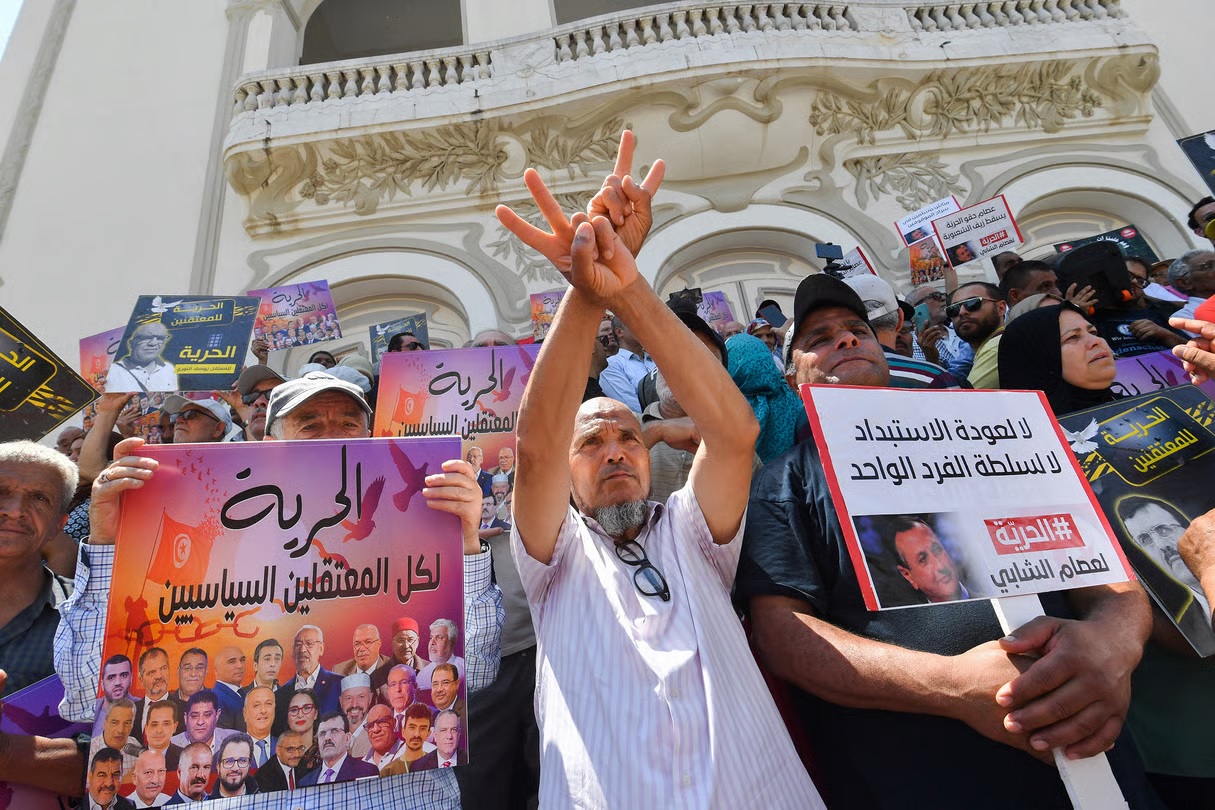
Eight Tunisian political parties issued a joint statement on October 7, 2026, denouncing political trials, supporting hunger strikers, and announcing their participation in the national march scheduled for October 17. The move comes amid persistent economic and social tensions.
About forty kilometers from Tunis, inside Mornaguia prison, a silent protest continues. On this October 7, several Tunisian parties chose to bring that carceral tension into the public eye. In a joint statement, democratic, progressive, and republican political formations issued a sweeping indictment of the country’s political, economic, and social situation.
Denouncing Judicial Proceedings
The signatories assert the existence of “political trials” and prosecutions targeting opinions. They call for the release of all detainees arrested for political activity, union work, or support for the Palestinian cause. They also demand an end to prosecutions and trials linked to the expression of opinions opposed to the ruling authorities’ choices.
Regarding prisoners, the statement expresses “total solidarity” with those who have begun a hunger strike. According to available information, opposition figure Ahmed Nejib Chebbi began a hunger strike on October 1. Another political figure, Abdelhamid Jlassi, was expected to join on October 6. The signatories hold current authorities responsible for the physical integrity of these individuals and call for compliance with international standards on the treatment of detainees.
Economic and Social Demands
The statement sharply criticizes the handling of unemployment. Signatories denounce the use of “security methods” against unemployed graduates, citing cases of harassment, sieges, and dispersals. They specifically mention the recent “March of Dignity” that set out from Sidi Bouzid governorate toward the capital and was prevented from advancing.
According to National Institute of Statistics data, Tunisia’s unemployment rate stood at 14.9% in the second quarter of 2026. Among higher education graduates, the rate reached 26.6%.
On the legislative front, the statement explicitly opposes two recent decrees. The first concerns the composition of the Independent High Authority for Elections, which signatories believe undermines its independence. The second repeals the Local Authorities Code, which they say calls into question the decentralization process.
Toward the October 17 March
The statement announces the signatories’ participation in the national march scheduled for October 17 in Tunis, under the slogan “Tunisia First… The People Above All.” This mobilization was launched on September 29 by nine national organizations, including the Tunisian General Labour Union, the National Order of Lawyers, the Tunisian League for Human Rights, and the National Union of Journalists. These organizations expressed concerns about the economic and social situation, as well as the state of rights and freedoms, and put forward demands regarding purchasing power, employment, and public services.
Looking Ahead
Will the October 17 march succeed in uniting opposition forces? How will authorities respond? The hunger strike behind the walls of Mornaguia and the call to take to the streets sketch two parallel lines of Tunisia’s current political landscape.


